


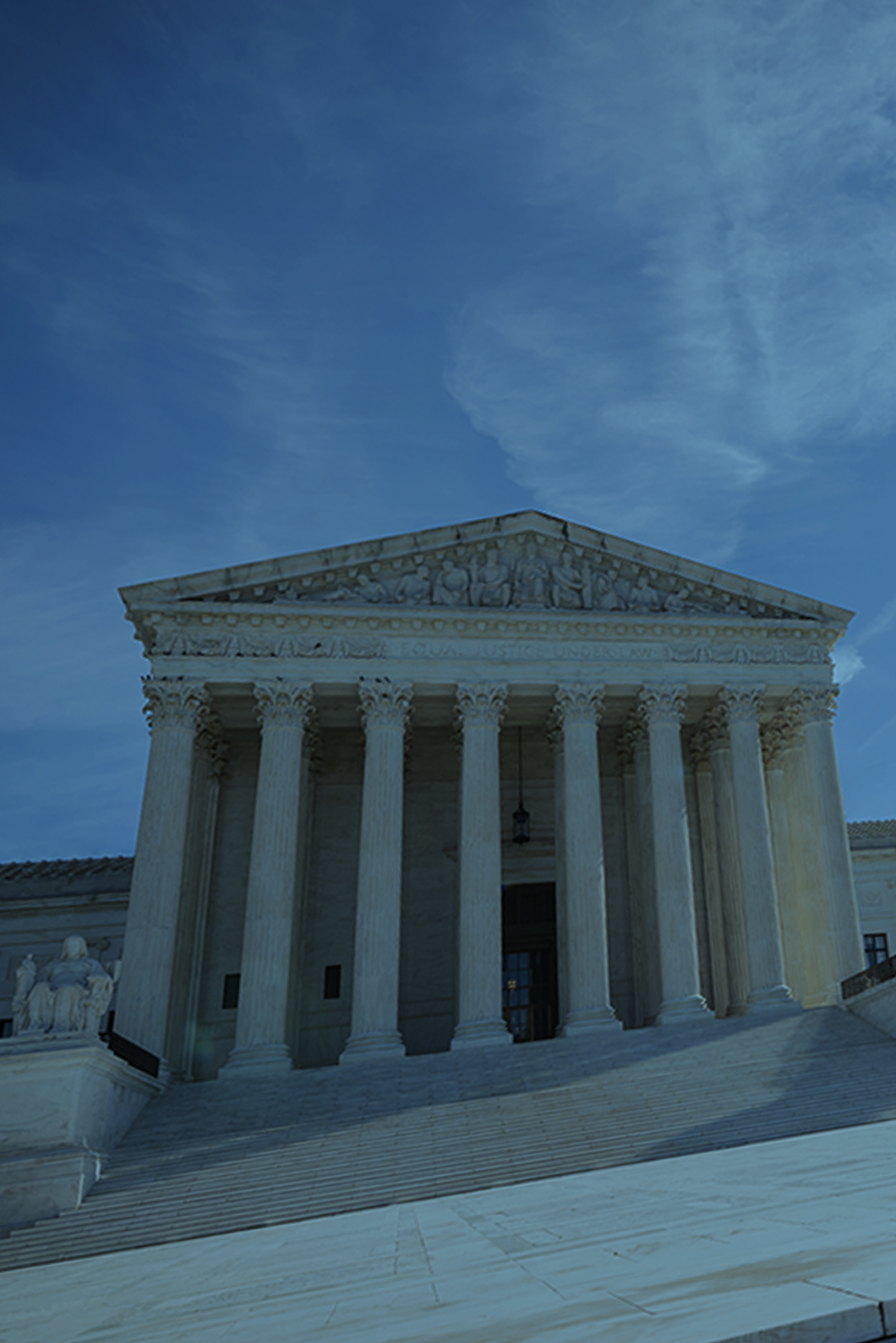


In its May 18, 2009 decision in Ashcroft v. Iqbal, the U.S. Supreme Court confirmed that the strict pleading standards set forth in Bell Atlantic Corp. v. Twombly, 550 U.S. 544 (2007), apply not only to antitrust matters, but to all civil complaints filed in federal court.
In Twombly, the Court held that, to allege a claim under Section 1 of the Sherman Act, a plaintiff must aver facts "plausibly" suggesting the existence of a conspiracy, which requires "enough fact to raise a reasonable expectation that discovery will reveal evidence of illegal agreement." In adopting this standard, the Court rejected the oft-quoted Conley v. Gibson principle that "a complaint should not be dismissed for failure to state a claim unless it appears beyond doubt that the plaintiff can prove no set of facts in support of his claim which would entitle him to relief."
By way of background, in Iqbal, federal officials had arrested and detained the plaintiff, a Muslim citizen of Pakistan, following the September 11, 2001 terrorist attacks. After the plaintiff pleaded guilty to criminal charges and served a term of imprisonment, the government released him to his native Pakistan. The plaintiff subsequently filed a civil action for alleged violation of his constitutional rights against numerous federal officials, including former U.S. Attorney General John Ashcroft and Federal Bureau of Investigation Director Robert Mueller. The plaintiff claimed that the defendants had adopted an unconstitutional policy that subjected him to harsh conditions of confinement on account of his race, religion, or national origin, in contravention of the First and Fifth Amendments to the Constitution.
The defendants moved to dismiss the plaintiff's complaint for failure to aver sufficient facts showing that the defendants individually were involved in any unconstitutional conduct. The district court denied the defendants' motion, holding that "it cannot be said that there is no set of facts on which [plaintiff] would not be entitled to relief as against [the defendants]." The defendants filed an interlocutory appeal to the U.S. Court of Appeals for the Second Circuit. While the defendants' appeal was pending, the Supreme Court issued its seminal decision in Twombly. Considering Twombly's application to the plaintiff's complaint, the Court of Appeals held that the pleading adequately alleged that the defendants' personal involvement in the discriminatory decisions, if true, violated clearly established constitutional law.
The Supreme Court granted the defendants' petition for writ of certiorari and reversed the Second Circuit's decision. In his majority opinion, Associate Justice Anthony M. Kennedy explained that Rule 8 of the Federal Rules of Civil Procedure "does not require detailed factual allegations, but it demands more than an unadorned, the-defendant-unlawfully-harmed-me accusation." Indeed, "[a] pleading that offers labels and conclusions or a formulaic recitation of the elements of a cause of action will not do. Nor does a complaint suffice if it tenders naked assertions devoid of further factual enhancement."
The Court further clarified the two working principles that underline a court's decision on a motion to dismiss. First, the tenet that a court must accept as true all allegations contained in a complaint does not apply to legal conclusions. "Threadbare recitals of the elements of a cause of action, supported by mere conclusory statements, do not suffice." Second, only a complaint that states a plausible claim for relief will survive a motion to dismiss. In other words, where the facts alleged in the complaint do not allow the court to infer more than the "mere possibility" of misconduct, "the complaint has alleged - but it has not shown - that the pleader is entitled to relief."
Although many lower federal courts have already extended the tightened pleading standards of Twombly to non-antitrust cases, now that the Supreme Court has made clear that it applies generally, we are likely both to see an increase in motions to dismiss and serious consideration of them by the lower courts.
Gay Parks Rainville and Adam A. Wolfe